FAQs
Everything you need to know. Can’t find the answer you’re looking for? Please chat to our friendly team.
What does Motse mean?
‘Motse’ – meaning ‘village’ in Setswana – is a word rich in symbolism, representing a philosophy that underscores the essence of the entrepreneurial journey. Motse signifies the collective ecosystem village, the tapestry of interconnected individuals and entities that come together to nurture and empower entrepreneurs. In the heart of Motse lies the recognition that success is not a solitary endeavour, but a collective achievement. Entrepreneurship thrives when knowledge is shared, when expertise is pooled, and when collaboration takes centre-stage.
Motse is about harnessing the wisdom of the experienced, the enthusiasm of the emerging, and the dedication of the community to foster growth, innovation, and progress. Imagine a village where mentors generously offer guidance, where investors believe in the vision, where fellow entrepreneurs provide support, and where institutions, including government agencies, and business support organisations create fertile ground for ideas to flourish. This is the essence of Motse – a place where the entrepreneurial journey is made possible by the collective efforts of all these stakeholders.
What is Collective Impact?
Collective impact brings people together in a structured way to achieve broad-scale social change. Achieving systemic change requires coordinated efforts across various sectors. No single organisation can succeed alone. A collective impact initiative employs a carefully structured process that focuses the entire ecosystem on a single set of goals, measured in the same way, and seeks to co-ordinate improvements at every stage in the progression.

Adapted from: Collective Impact Forum
If it takes a village to raise a child, it will take an ecosystem to make the entrepreneurial journey possible.
What is Motse Collective Impact?
In South Africa, a fragmented entrepreneurship ecosystem lacks integrated information sharing, demanding collective thought leadership and a cohesive platform through which to share learnings and measure collective milestones. As such, ‘Motse Collective Impact’ was born. We believe that sharing knowledge and resourcing strategies to foster innovation, coordinating policies, promoting cross-border investment, and building co-creative leadership capacities are but a few much-needed steps to achieve global sustainability. The common denominator here? Collective Impact.
Chief Executive Office of AGGP_SA, Zimkhitha Peter, notes the following: “Allan & Gill Gray Philanthropy SA (AGGP_SA) is part of the Group of Allan & Gill Gray Philanthropies (AGGP) and we are excited to embark on this journey of contributing to a thriving Entrepreneurship Ecosystem in SA. We have chosen a strategic framework of Collective Impact through which we believe we can work together with other incredible ecosystem builders.”
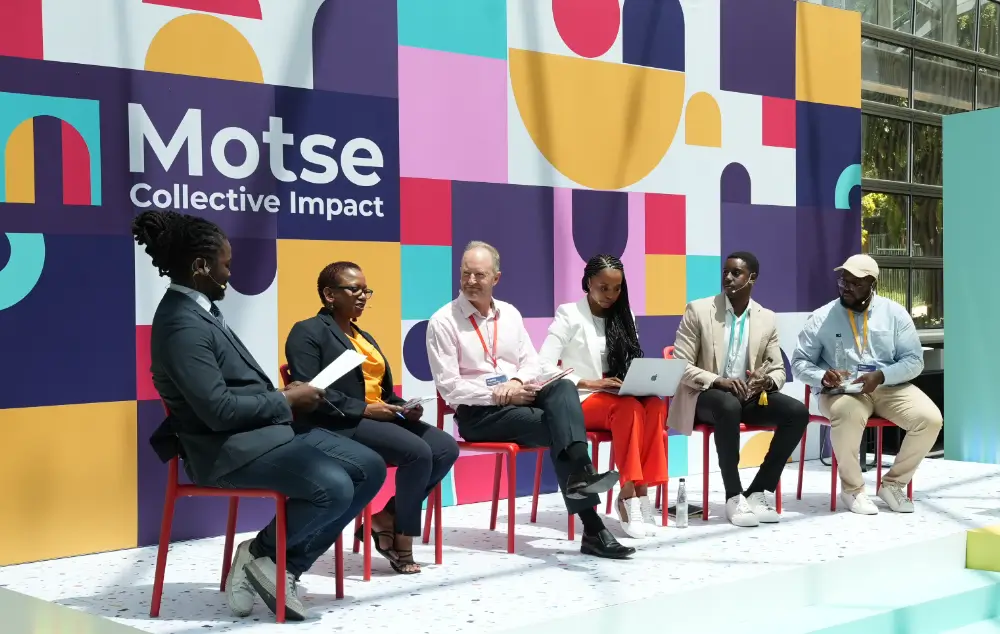
Motse Collective Impact, a convening programme of Allan & Gill Gray Philanthropies, unites individuals and entities to nurture and champion the entrepreneurial spirit. Motse Collective Impact unites diverse, and yet interdependent stakeholders, such as ecosystem builders, policy makers, and entrepreneurs to contribute to the advancement of entrepreneurship ecosystems in South Africa through structured convenings and working groups. The introduction of this convening platform serves as a village of structured support through hyper connectedness, shared purpose, and knowledge-sharing within the entrepreneurship ecosystem, which is underpinned by the Allan & Gill Gray Philanthropies vision to provide for an empowered, prosperous, productively engaged African citizenry.
Motse Collective Impact is based on Professor Erik Stam’s entrepreneurial ecosystem model, which includes the 10 conditions that affect entrepreneurial outputs (entrepreneurial activity) and outcomes indicating value creation (productivity, income, employment, and well-being). This ecosystem approach highlights the interlinking nature of an ecosystem. The 10 conditions are: Talent, Culture, Leadership, Formal Institutions, Finance, Networks, Knowledge, Intermediaries, Demand, and Physical Infrastructure. When all the components are functioning well, research shows that it is far easier for productive entrepreneurship to take place, meaning more businesses are able to start and grow.

What is an entrepreneurial ecosystem?
Successful entrepreneurial ecosystems exhibit strong collaboration, connectivity, and a culture of continuous learning and innovation. The interplay between these elements creates a supportive environment where entrepreneurship can thrive. An entrepreneurial ecosystem is a complex and dynamic network of individuals, organisations, resources, and cultural elements that work together to foster and support entrepreneurship.
Entrepreneurship is a crucial part of local economic development and nation building, and South Africa is considered to a be a leader in terms of its highly sophisticated entrepreneurship ecosystem with significant support among enterprise builders. Entrepreneurship ecosystems play a pivotal role in building a more vibrant entrepreneurship community in South Africa.
According to Professor Erik Stam, Utrecht University, Netherlands / Allan Gray Centre for Africa Entrepreneurship (AGCAE): “There is no optimal ecosystem. Once you have tackled one problem there will be another one to replace it. The action will never stop, but the idea is to be strategic. To know where we want to go. To implement and give honour to the implementer. To show your impact and celebrate your successes.”
Ewing Marion Kauffman Foundation, adds to this by noting that an “ecosystem that allows for the fast flow of talent, information, and resources helps entrepreneurs quickly find what they need at each stage of growth.”